
Preventing Low Voltage Issues
Make & share a podcast clip
Keep the exact passage and a link to the full episode. Choose up to three minutes, with enough context to be fair to the speaker.
Preview uses this episode’s audio. Browser audio export, when supported, takes the length of the selected clip. Nothing plays until you choose Preview.
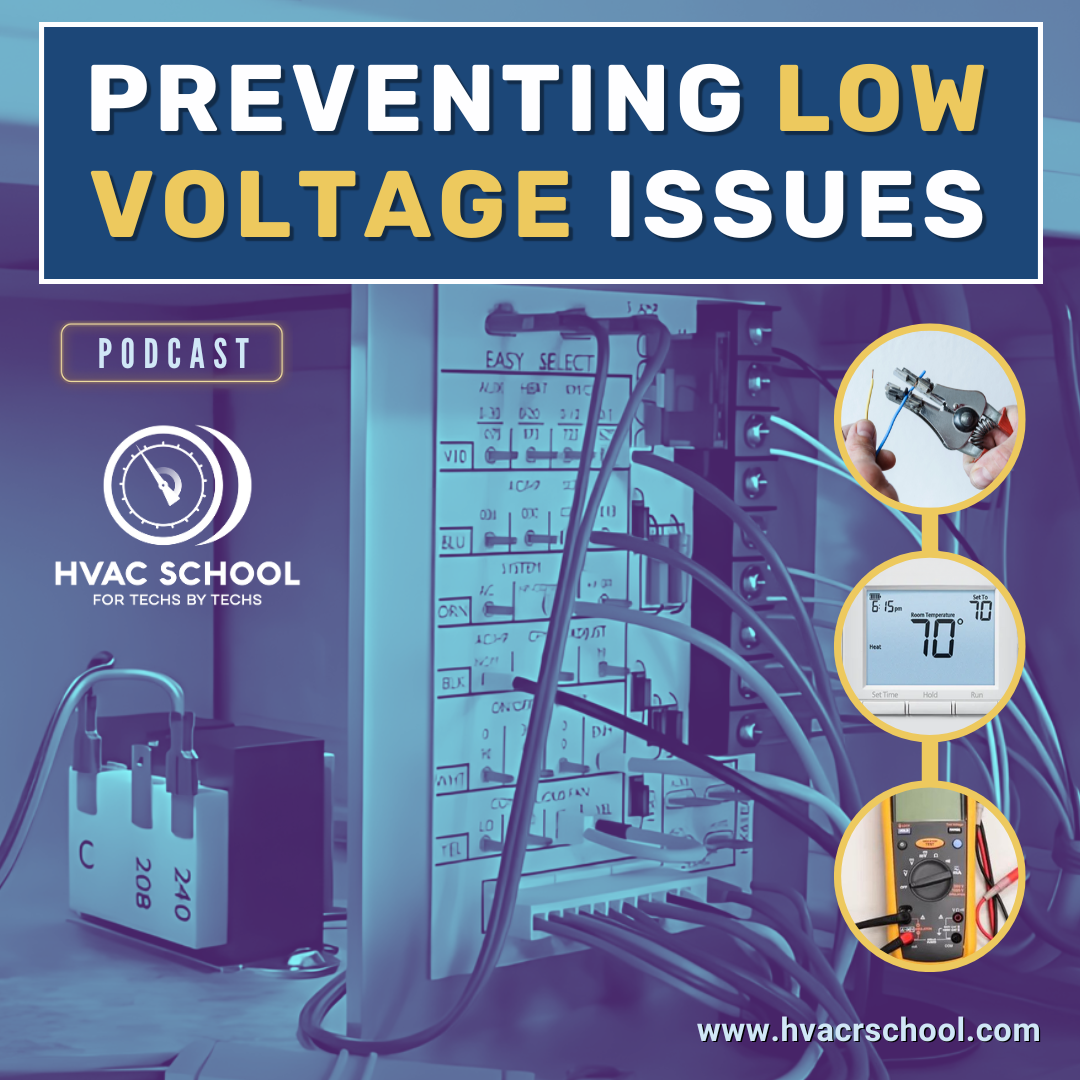
In this episode, Bryan and Bert dive deep into the world of low voltage wiring in HVAC systems. They discuss common mistakes, best practices, and troubleshooting techniques that technicians and contractors should be aware of when dealing with control wiring.
The conversation begins with a focus on mechanical issues, such as running wires in places where they can be damaged and poor splicing techniques. Bryan and Bert emphasize the importance of proper wire stripping, both for the outer jacket of control cables and individual conductors. They share tips on how to avoid damaging wires during installation and stress the significance of planning wire placement, especially behind thermostats.
The discussion then shifts to common miswiring issues, including incorrect terminal connections and misunderstandings about system configurations. They explore the challenges of wiring heat pumps, straight cool systems, and gas furnaces, highlighting the importance of understanding how different thermostats and equipment interact. The hosts also delve into the complexities of dehumidification control wiring and the need to comprehend how various controllers operate.
Bryan and Bert also address communicating systems and offer advice on preventing communication issues. They stress the importance of running new control wiring, considering shielded cable for long runs, and being meticulous about connections.
Topics covered in the podcast:
<p
- Proper wire stripping techniques for control cables
- Common miswiring issues in HVAC systems
- Thermostat wiring and configuration challenges
- Dehumidification control wiring complexities
- Heat pump vs. straight cool/gas furnace wiring differences
- Communicating systems and preventing communication issues
- Using shielded cable for long control wire runs
- Troubleshooting intermittent low voltage problems
- The importance of reading manuals and understanding system configurations
- Tips for managing wires behind thermostats and in control panels
- Using megameters for testing control wires
- Encouragement for technicians dealing with low voltage issues
Have a question that you want us to answer on the podcast? Submit your questions at https://www.speakpipe.com/hvacschool.
Purchase your tickets or learn more about the 6th Annual HVACR Training Symposium at https://www.hvacrschool.com/symposium.
Subscribe to our podcast on your iPhone or Android.
Subscribe to our YouTube channel.
Check out our handy calculators here or on the HVAC School Mobile App for Apple and Android.
Highlight a short passage, or bring a question about a specific moment into HVAC No Bull Forum.
Discuss this reference → Related forum discussionsAuthor:











Comments
To leave a comment, you need to log in.
Log In