Heatshrink Crimp Connectors
May 2, 2018
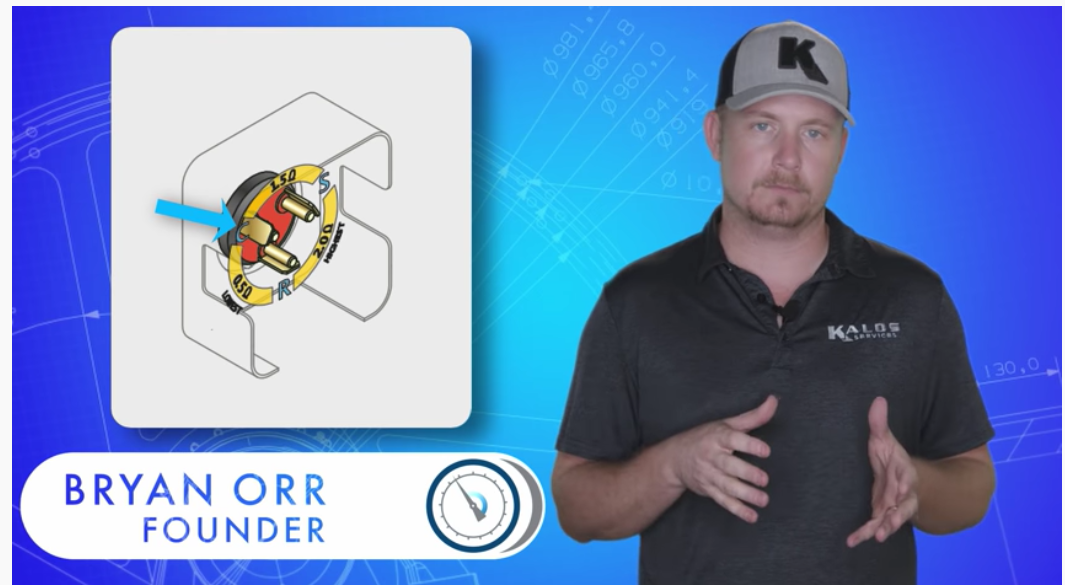
Bryan Orr demonstrates how to set up a transformer with a switch for testing purposes by splicing wires with heat-shrink butt connectors.




Bryan starts off with a fuse holder with female spade terminals. To make a spliced connection, he exposes the wires and reads them to make sure there is a closed circuit. Then, he doubles up the ends of the wires and puts some heat shrink over them. He uses his crimpers to fasten the heat shrink tightly and then applies heat to the heat shrink.
After that, he takes the exposed wire and attaches a female spade to make a quick disconnect. He puts the jaw opposite the split. Then, he uses heat shrink over the connection to keep it secure. So, he can use a female spade to make a connection.
Then, Bryan makes a connection to a switch. After connecting all of the wires, Bryan can connect them from the transformer’s female spade terminals to the switch. When he connects the relay, he can connect it straight to the switch and receive power from the transformer.
NOTE: In general, we only use crimp connections on stranded wire.













Comments
Generally, terminals that provide power (hot) or (line side) use female (shrouded) terminals , or, less common, shrouded male terminals. This to minimize the chance of the terminal shorting to the return side circuit.
Report comment
Generally, terminals that provide power (hot) or (line side) use female (shrouded) terminals , or, less common, shrouded male terminals. This to minimize the chance of the terminal shorting to the return side circuit.
Report comment
Thanks Bryan, all your teachings are great! I applaud your effort and all the great content.
Report reply
Thanks Bryan, all your teachings are great! I applaud your effort and all the great content.
Report reply
To leave a comment, you need to log in.
Log In