
BACK
 Troubleshooting 90%+ Gas Furnaces
 The Case for Buying a Combustion Analyzer
 What is Enthalpy?
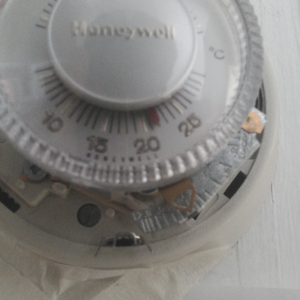 The Good Old Heat Anticipator
 Standing Pilot – Short #228
 History of Gas Furnaces – Redux
 Heat Exchangers and Temperature Rise – Short #227
 Q&A – Evap Placement – Short #221
 Condensing Furnace Drain Guidance w/ AC Service Tech
 Q&A – Sizing Heat Pumps for Heat Load – Short #213
 When to Switch to Emergency Heat? – Short #190
Combustion Venting Categories – Short #189
 Primary & Secondary Air in Combustion – Short #187
#heating
Tech Tips:
This tech tip recaps the livestream by the same name, featuring HVAC School contributors Matt Bruner and Adam Mufich and special guest Ty Branaman. You can watch that livestream on our YouTube channel HERE and visit Ty’s at https://www.youtube.com/@love2hvac. While 80% gas furnaces are relatively commonplace in the Southeastern United States, where HVAC School is […]
Read more
Last year, I bought my first combustion analyzer. I had just started my own company and felt the additional weight of responsibility to sit down and determine the best way to verify that the furnaces I was servicing were working safely. In the past, the most extensive testing I had done was a visual inspection […]
Read more
Enthalpy is easy. It’s just a state function that depends only on the prevailing equilibrium state identified by the system’s internal energy, pressure, and volume. It is an extensive quantity. Simple. Like most things, the scientific definition is as clear as mud. In HVAC/R, we use enthalpy measurement to come up with the total heat […]
Read more
As a technician, you most likely know some customers who still have an oldie thermostat (you know, those old mercury bulb things, like the round Honeywell CT87 and such). Keep in mind that those usually have an adjustable heat anticipator. If you’re newer in the field, you may not have seen or worked with those […]
Read more
Podcasts:
In this short podcast episode, Bryan talks about the standing pilot gas systems and the ignition strategy in gas-fired appliances. Standing pilots are very simple devices that are common in fuel logs, water heaters, and some pool heaters. These devices have a thermocouple or thermopile; in a thermocouple, two dissimilar metals are connected at […]
Read more
Jim takes us all the way through the history of furnaces, from the Stone Age when he was a child to modern modulating condensing types. The goal of a furnace is to move heat, so a furnace uses heat exchangers to facilitate heat transfer. Furnaces have primary and secondary air. The primary air goes […]
Read more
In this short podcast episode, Bryan talks about heat exchangers and temperature rise in gas furnaces, especially 80% open-combustion gas furnaces. Temperature rise is the difference between the return air temperature and supply air temperature; in cooling, we usually refer to this difference as a delta T or temperature split. The manufacturer sets a […]
Read more
In this short podcast, Bryan talks about evaporator coil placement based on a question submitted by a listener, John. Evap coil placement differs in furnace applications versus air handlers. When we use air conditioners with furnaces, we usually put evaporator coils on the positive side to protect the heat exchanger from rusting out during […]
Read more
Bryan and Craig Migliaccio (AC Service Tech)dive deep into the complexities of managing condensate drainage in high-efficiency (90%+) gas furnaces. The conversation begins with a clear explanation of why these furnaces produce condensate in the first place – they have two heat exchangers that extract so much heat from the combustion gases that water […]
Read more
In this short Q&A podcast, Bryan answers a listener-submitted question about sizing heat pumps for heat load in heating mode, something that we haven’t talked much about in the past due to the greater need for cooling in our market. In most cases across the country, a heat pump’s heating loads will be greater […]
Read more
In this short podcast episode, Bryan talks about when to switch to emergency heat. He talks about coefficient of performance (COP) and how it’s a deciding factor when to run emergency heat, which is when a system ONLY runs the backup heat; it doesn’t use it as supplementary heat. When we have a heat […]
Read more
In this short podcast episode, Bryan talks about the four different combustion venting categories for gas appliances as set by ASHRAE and where you’ll see them. He also shares some notes about pressurization. These categories deal with the pressurization and temperature ranges of the vents. Category 1 venting is used for old-school open-combustion gas […]
Read more
In this short podcast, Bryan dives into a gas heating topic: primary & secondary air in combustion. Primary air is the air and oxygen content that enters the furnace BEFORE combustion. In older furnaces, prior to induced combustion, air was drawn in through the front. These older furnaces had adjustable shutters that we could […]
Read more