
Why it REALLY gets hot upstairs w/ Alex Meaney
Make & share a podcast clip
Keep the exact passage and a link to the full episode. Choose up to three minutes, with enough context to be fair to the speaker.
Preview uses this episode’s audio. Browser audio export, when supported, takes the length of the selected clip. Nothing plays until you choose Preview.
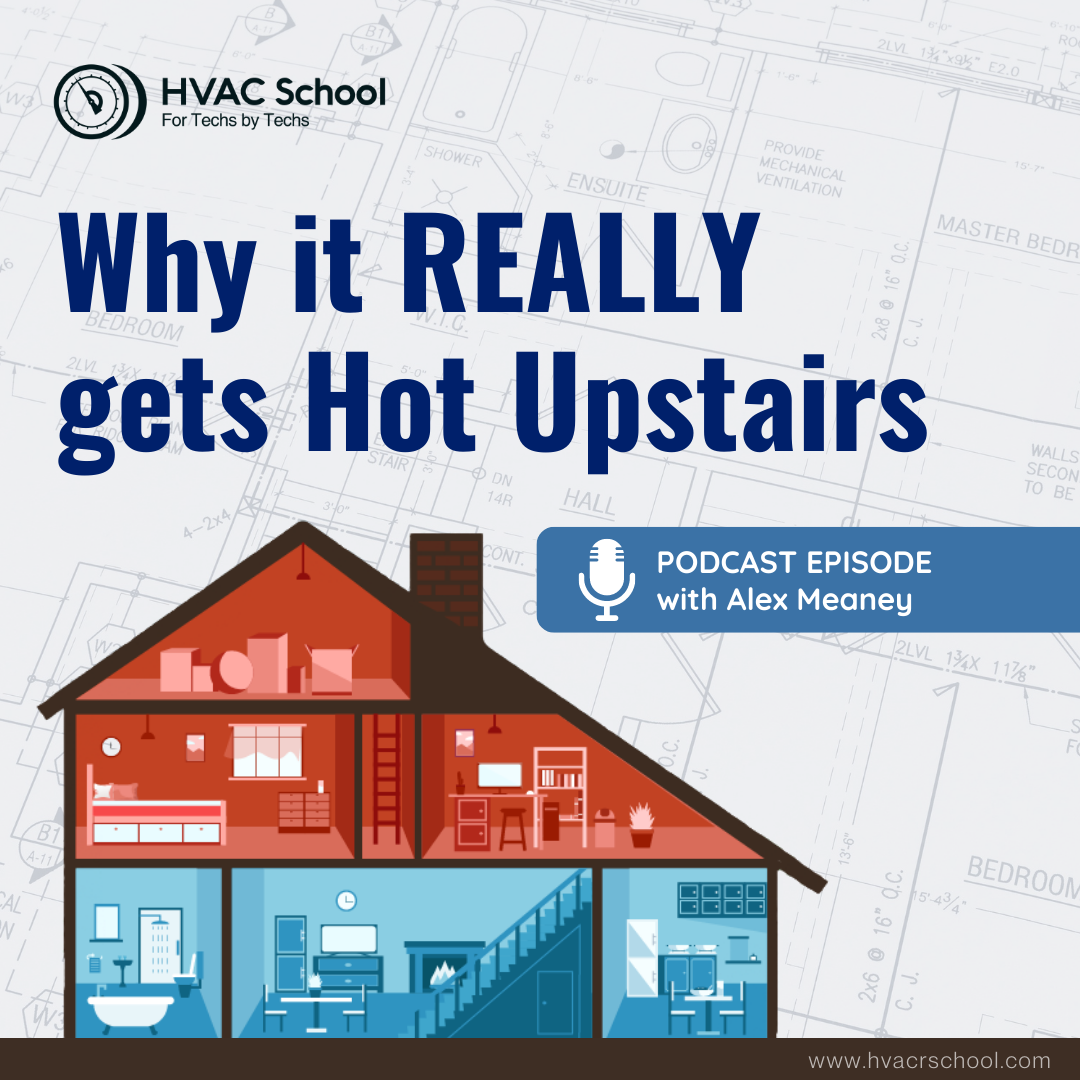
Alex Meaney returns to the podcast to explain why it REALLY gets hot upstairs and what we can do about it. He also talks a bit about his new business.
Heat technically doesn’t rise; warm air is less dense than cooler air, so cooler air sinks as warmer air rises. In many cases, people blame stratification and the stack effect for warm upstairs areas, but there may actually be other issues at play, especially if the issue only seems to happen in the summer.
Many apparent convective problems are actually due to building science errors, especially poor insulation when walls are exposed to attic space. When air moves via convection, it brings the heat it contains with it, which can contribute to comfort problems. To help figure out what is going on, try to see what the floor temperature is; a cold floor usually indicates a building design mistake, particularly a joist bag problem.
Some of the solutions that may sound good aren’t actually that effective, including placing return ducts higher. In many cases, we have to think about fixing the actual building, not the HVAC system. Some attics that are poorly ventilated and insulated will need to be reinforced.
Alex and Bryan also discuss:
- Mean HVAC Consulting & Design
- Wind washing and exposure within the insulation
- R-value
- Pressurization and how it relates to hot air “rising”
- Manual J and its shortcomings with significant heat gains/losses
- Duct design and using a Ductulator
- Soffit vents, ridge vents, blown-in insulation, and infiltration
- Why building science skills are important for HVAC technicians
- Poorly conceived home designs
- Diagnostic tips and tricks
- Vapor-permeable air barriers
- Sizing, capacity, and power consumption
Learn more about what Alex is doing at meanhvac.com.
If you have an iPhone, subscribe to the podcast HERE, and if you have an Android phone, subscribe HERE.
Check out our handy calculators HERE.
Highlight a short passage, or bring a question about a specific moment into HVAC No Bull Forum.
Discuss this reference → Related forum discussions









Comments
To leave a comment, you need to log in.
Log In