
Startup vs Commissioning – Short 122
Make & share a podcast clip
Keep the exact passage and a link to the full episode. Choose up to three minutes, with enough context to be fair to the speaker.
Preview uses this episode’s audio. Browser audio export, when supported, takes the length of the selected clip. Nothing plays until you choose Preview.
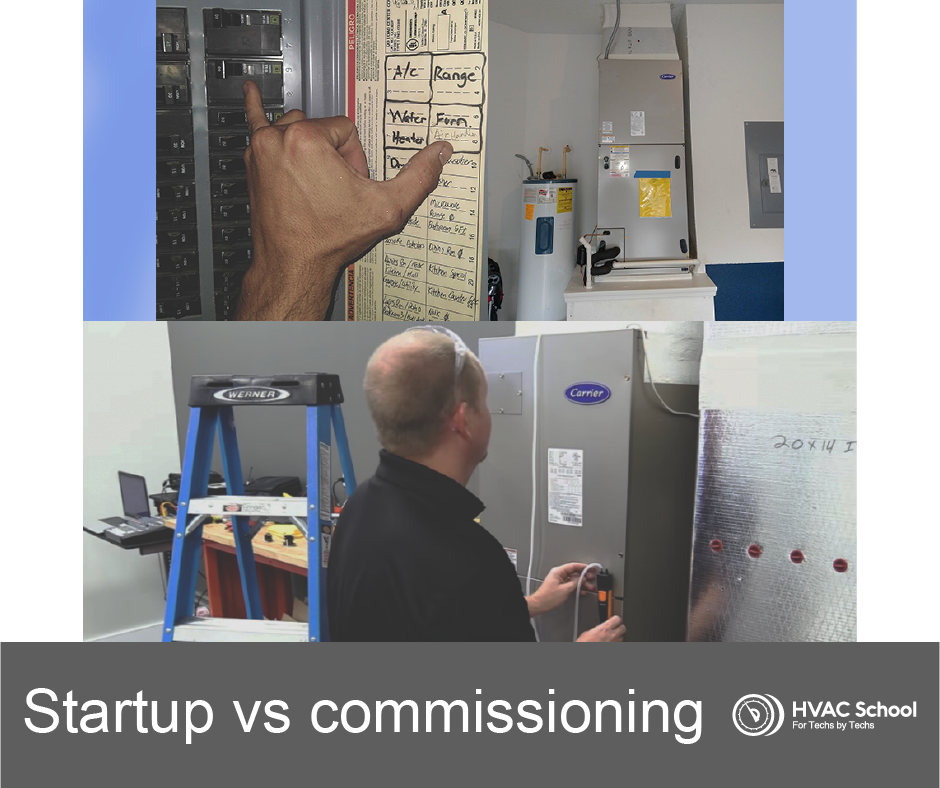
In today’s short podcast, Bryan explores the differences between startup and commissioning.
Startups typically involve going in during the construction phase after the drywall has been sealed up. (Vents, ducts, and copper piping typically go in before the drywall.) A technician can then perform a startup. The startup includes testing the drain line, checking the charge, checking for leaks, and seeing if the equipment performs its most basic function. (Does the gas furnace make flame? Does the A/C unit blow cold air?)
The startup’s goal is to get the equipment working. A startup does NOT focus on peak performance. A good startup will typically suffice for a cookie-cutter residential construction.
Conversely, the goal of commissioning is to optimize the equipment and test the advanced functions. Combustion analysis, airflow tests, and dehumidification tests all fall under the “commissioning” umbrella. Commissioning is where we refer to Manual S and Manual J designs to ensure the equipment is performing according to design. Data collection, especially on sensible and latent capacities, is the core element of commissioning.
Commissioning also involves checking up on secondary functions, such as checking if heat strips activate during defrost. A custom construction plan will require commissioning to ensure that the equipment runs optimally in the uniquely designed space.
So, in short, equipment startup is about making sure the equipment works as it should on a basic level. On the other hand, commissioning uses data and specific instrumentation to make sure the equipment is running to its design and full potential.
Bryan also covers:
- Stages of residential construction
- Startup in new construction projects
- Capping and filling drains
- Who can perform a startup? (Junior techs, installers, senior techs, etc.)
- Instrumentation for commissioning
If you have an iPhone, subscribe to the podcast HERE, and if you have an Android phone, subscribe HERE.
Check out our handy calculators HERE.
Highlight a short passage, or bring a question about a specific moment into HVAC No Bull Forum.
Discuss this reference → Related forum discussionsAuthor:











Comments
To leave a comment, you need to log in.
Log In