
Push-Pull Recovery – Short 119
In this short podcast episode, Bryan discusses push-pull recovery, how it works, and what we need to know about it.
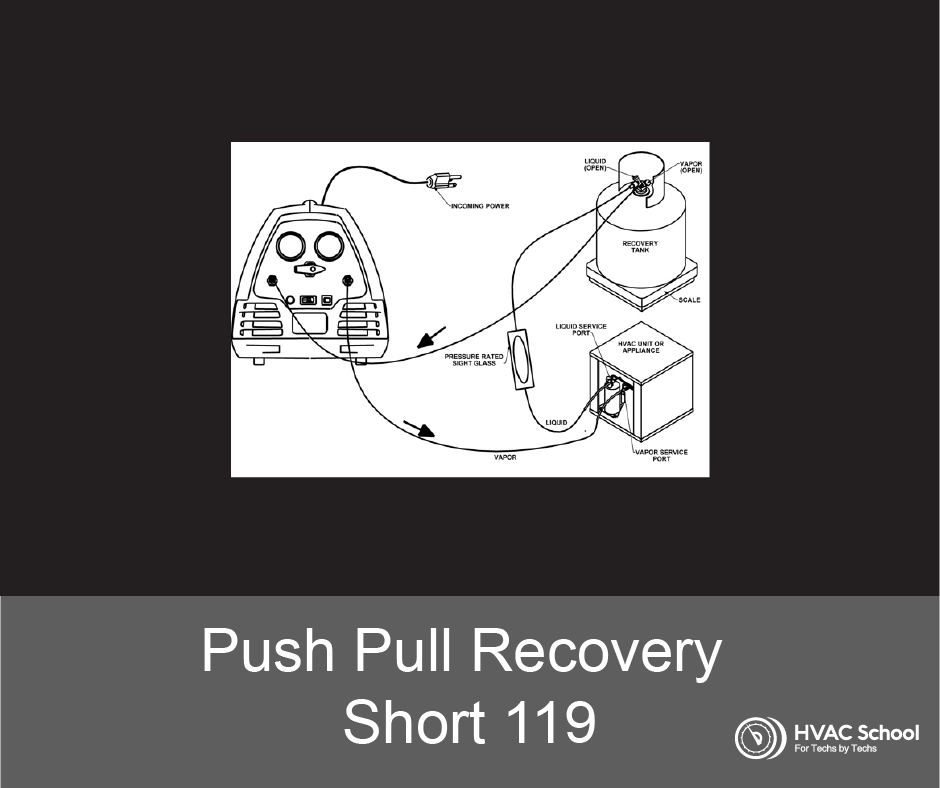
Push-pull recovery is a somewhat counterintuitive method of recovering liquid rapidly. We simply do that by pulling refrigerant out of the system and pushing it into the tank. However, when we pack refrigerant into a tank, the tank pressure and temperature increase. So, it can be more difficult to get refrigerant into the tank as the job goes on.
When we recover liquid refrigerant on large systems (20+ pounds of charge), you connect a line from the liquid line or receiver and attach it to one side of the tank. Then, you pull from the system the other side of the tank should lead into the recovery machine. Attaching to the recovery machine helps depressurize the tank.
When pulling out of the tank, you'll want to make sure the refrigerant is a vapor. The recovery machine should be pulling only vapor refrigerant out of the tank. While you're depressurizing your tank, you will be pressurizing your system to push the liquid refrigerant out of the system and into the recovery tank. (Short hoses with a large diameter are usually best for quick recovery.)
If you have an iPhone, subscribe to the podcast HERE, and if you have an Android phone, subscribe HERE.
Check out our handy calculators HERE.
Author:










Comments
Nice
Nice
To leave a comment, you need to log in.
Log In