
Modulating Compressors w/ Copeland
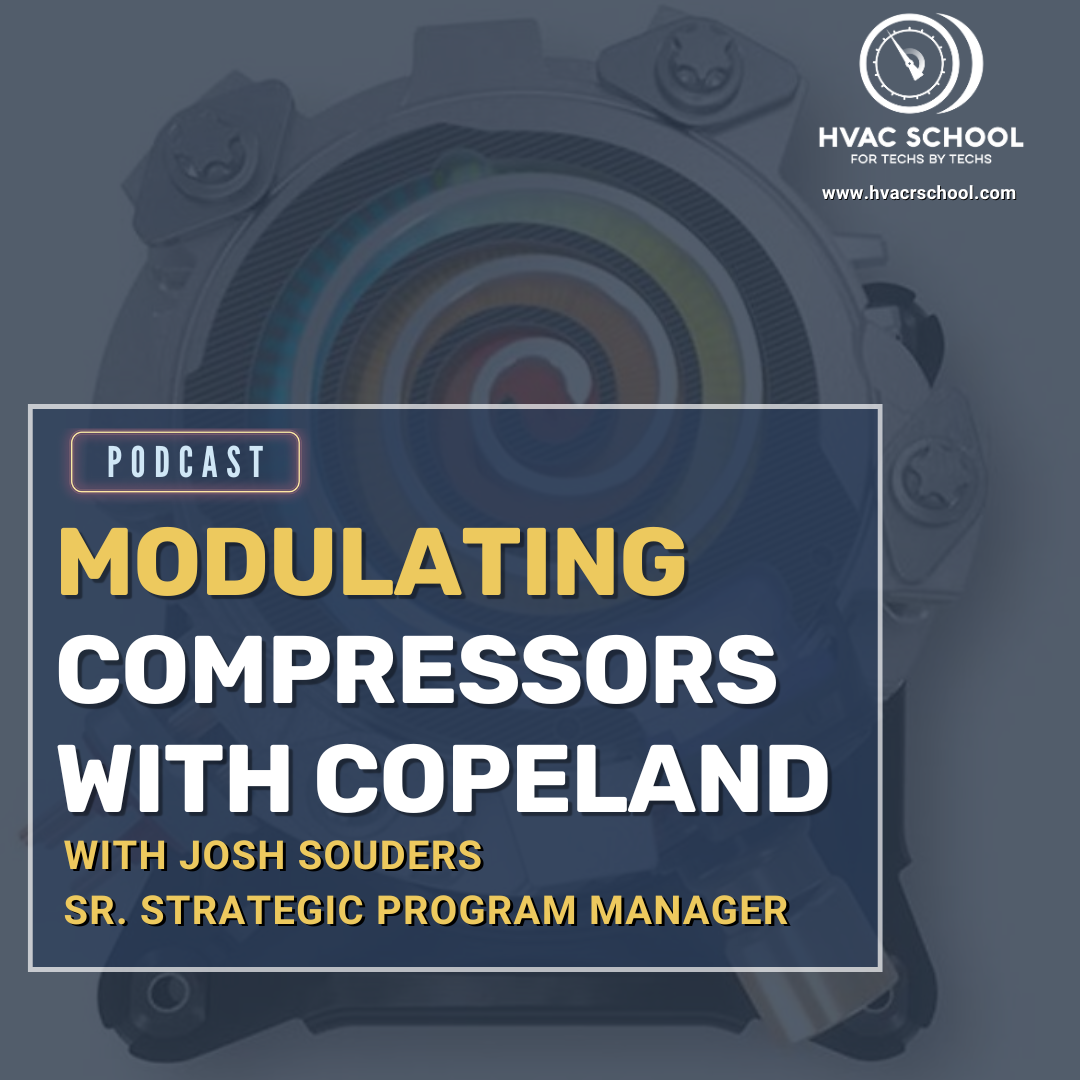
In this episode, Josh Souders from Copeland joins the HVAC School Podcast to discuss modulating and variable capacity technologies in HVAC systems. Josh provides an in-depth look at the different levels of modulation available in residential HVAC equipment, from traditional fixed-speed systems to two-stage, multi-stage, and true variable-speed compressors.
The conversation covers the benefits of modulating systems, including improved energy efficiency, better comfort, and enhanced humidity control. Josh explains how modulating technologies allow systems to more closely match the actual cooling or heating load of a building, reducing temperature swings and providing more consistent comfort. He also discusses how longer run times with modulating systems can improve dehumidification performance in humid climates.
The interview delves into the technical details of how different modulating technologies work, from two-stage scroll compressors with solenoid valves to inverter-driven variable speed compressors. Josh highlights some of the challenges and considerations when implementing modulating systems, including proper sizing, airflow matching, and control strategies. The discussion also touches on cold climate heat pumps and how variable speed technology enables better performance in colder temperatures.
Key topics covered:
- Types of modulating HVAC technologies: fixed-speed, two-stage, multi-stage, variable-speed
- Benefits of modulation: energy efficiency, comfort, humidity control
- Technical details of how modulating compressors work
- Importance of proper system sizing and airflow matching
- Cold climate heat pump applications
- Energy efficiency ratings and standards (SEER, EER, HSPF)
- Federal and local incentives for high-efficiency HVAC systems
- Upcoming refrigerant transitions to A2L refrigerants
- Industry trends towards increased adoption of modulating technologies
Arm yourself with knowledge from AC & Heating Connect by Copeland at https://www.ac-heatingconnect.com/.
Have a question that you want us to answer on the podcast? Submit your questions at https://www.speakpipe.com/hvacschool.
Purchase your tickets or learn more about the 6th Annual HVACR Training Symposium at https://hvacrschool.com/symposium.
Subscribe to our podcast on your iPhone or Android.
Subscribe to our YouTube channel.
Check out our handy calculators here or on the HVAC School Mobile App for Apple and Android.
Author:





Comments
To leave a comment, you need to log in.
Log In