
Hard Start Types and Applications Podcast
Make & share a podcast clip
Keep the exact passage and a link to the full episode. Choose up to three minutes, with enough context to be fair to the speaker.
Preview uses this episode’s audio. Browser audio export, when supported, takes the length of the selected clip. Nothing plays until you choose Preview.
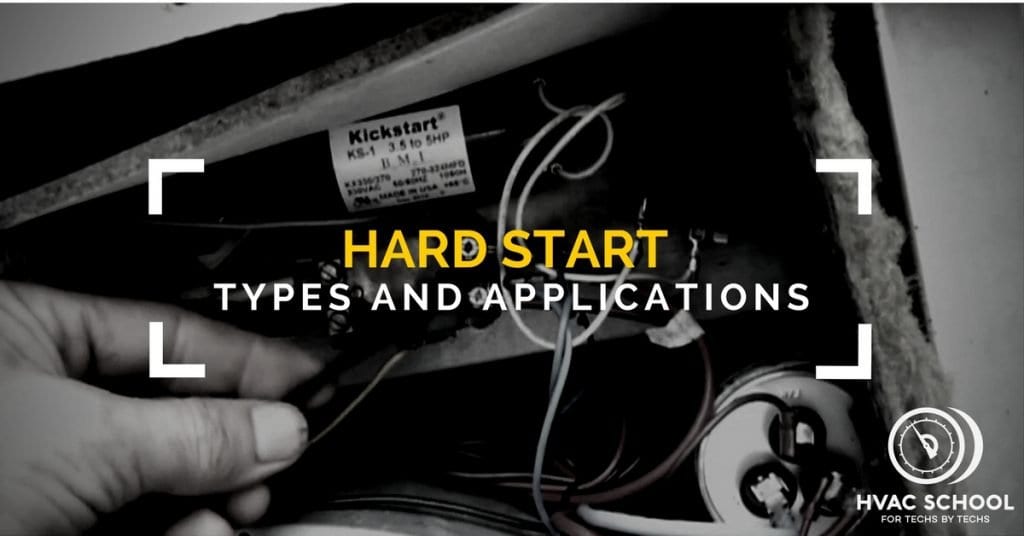
In this episode, Bryan speaks with James Bowman from Rectorseal about hard start kits, PTCR devices, run capacitors, compressor overheating, and the Kick Start product. We also go pretty in-depth on potential relays and how they operate.
Hard start kits are mechanical potential relays connected to a capacitor, and they aid in starting the compressor. They come in two-wire and three-wire types. However, they have some pitfalls. For example, they are easy to abuse. You may also come across a “hard start kit” that does not have a mechanical potential relay (such as a PTCR), which is not a true hard start. Many of those false kits are low-quality and borderline dangerous.
The start cycle starts in approximately 0.4 seconds. A proper hard start kit will help the compressor start in less than 0.4 seconds. Two-wire electronic start kits don’t react quickly enough and cannot remove themselves from the circuit in time. Two-wire mechanical potential relay kits, on the other hand, measure voltage between run and start, unlike a three-wire device that measures the voltage between common and start. Three-wire devices are typically okay, but they are not a universal component that can fit every unit.
Rectorseal’s Kick Start kit is an aftermarket kit designed to work on most units as a replacement for the OEM kit. When dealing with aftermarket hard start kits, the best practice is to know your equipment and the hard start kit’s compatibility with the unit. Hard start kits work especially well with reciprocating compressors with long line sets and HVAC systems with hard shutoff TXVs.
Bryan and James also discuss:
- Potential relays
- Back EMF
- Start capacitors
- Testing run capacitors under load and with meters
- Looking at systems holistically
- Copper plating inside compressors
For more information, go to rectorseal.com.
If you have an iPhone, subscribe to the podcast HERE, and if you have an Android phone, subscribe HERE.
Highlight a short passage, or bring a question about a specific moment into HVAC No Bull Forum.
Discuss this reference → Related forum discussions










Comments
Bryan,
Have you seen the TES5 (Turbo Easy Start)? It is a start capacitor and the potential relay inside of 1 can. Two wires to hook up and it covers from 1 to 5 tons.
Report comment
Bryan,
Have you seen the TES5 (Turbo Easy Start)? It is a start capacitor and the potential relay inside of 1 can. Two wires to hook up and it covers from 1 to 5 tons.
Report comment
To leave a comment, you need to log in.
Log In