
Furnace Commissioning Part 1 w/ Jim Bergmann – Input/Rise (Podcast)
Make & share a podcast clip
Keep the exact passage and a link to the full episode. Choose up to three minutes, with enough context to be fair to the speaker.
Preview uses this episode’s audio. Browser audio export, when supported, takes the length of the selected clip. Nothing plays until you choose Preview.
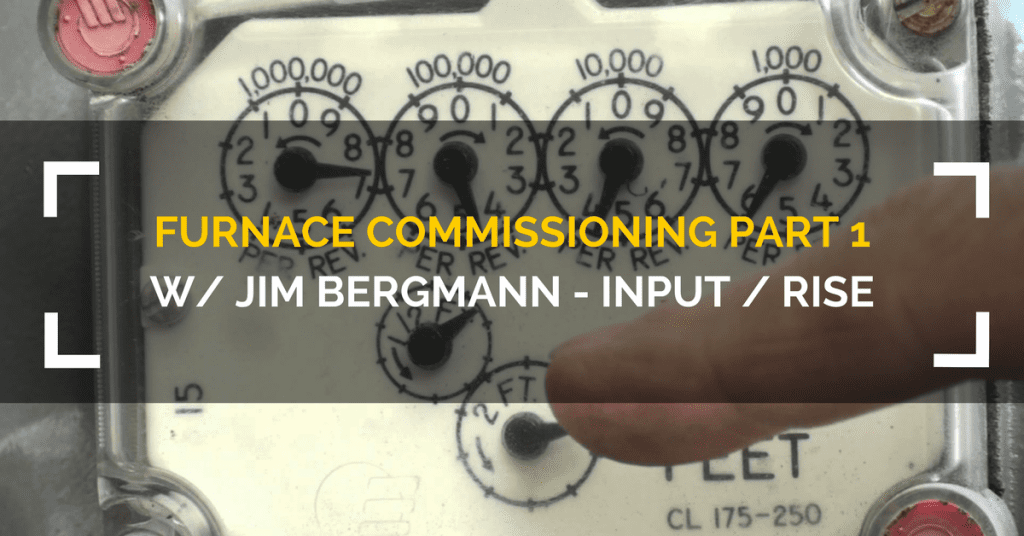
In today’s podcast episode, Jim Bergmann covers furnace commissioning, including setting up furnace input, clocking the meter, setting temperature rise, and much more. The goal of commissioning is to optimize a furnace’s efficiency; we want to make sure we correctly engineer the intake/exhaust system to extract as much heat from the flue gas as possible.
The commissioning process for an 80% furnace is pretty similar to that of a high-efficiency furnace. Checking gas pressure, setting temperature rise, and combustion analysis are critical procedures when commissioning both furnace types. Moreover, you must know the heat content of the fuel and the amount of fuel going into the furnace before you can determine the correct input. There is an acceptable range for gas pressure, typically within 10% of the specs (usually 3.5″ wc, so the acceptable range is 3.2-3.8″ wc). Both the gas pressure and heat content let you know how efficiently the furnace is firing.
When checking the input, you must clock the gas meter; you do that by timing a single revolution of the gas meter and determine how much fuel goes into the appliance during that time period. You can’t have the water heater on at the same time that you are clocking the meter. When you clock the meter, you can start with a gas pressure of 3.5″ wc and go up to 3.8″ wc. When clocking the gas meter, you may realize that the orifices are incorrectly sized.
Ideally, you want your temperature rise to be in the middle of the manufacturer-specified range. For example, if the range is 40-60 degrees, you would want your temperature rise to be close to 50 degrees).
Jim also discusses:
- Weighing condensate
- Primary vs. secondary air
- Excess air
- Changing/resizing orifices
- Other gas lines in the home
- Ductwork sizing for temperature rise/CFM
- Filter considerations
If you have an iPhone, subscribe to the podcast HERE, and if you have an Android phone, subscribe HERE.
Highlight a short passage, or bring a question about a specific moment into HVAC No Bull Forum.
Discuss this reference → Related forum discussionsAuthor:












Comments
To leave a comment, you need to log in.
Log In