
Get Tech Tips
Subscribe to get free tech tips.
Non-Invasive Testing: A Smarter Approach to System Diagnostics

This tech tip about non-invasive testing comes from a post in the HVAC School Facebook group by Ed Janowiak. Ed is the Manager of HVAC Design Education at ACCA, a longtime friend of HVAC School, and an educator who does a lot of great work for the industry. Thanks, Ed!
This past Thursday, I taught a class where I briefly discussed a quick version of non-invasive testing. Paul Mitchell recently asked about it in the HVAC School Group, and a few of my peeps contributed valuable insights, sharing links to more in-depth discussions on the subject.
However, I also noticed some resistance to the idea. Some comments dismissed non-invasive testing as lazy, insisting that a simple temperature difference was adequate. One person even tried shifting the conversation from maintenance procedures to the necessity of using gauges when checking the charge on an installation. And of course, there was the classic remark about how “a little pshht doesn't add up to anything.” Come on now—a wet fart is a wet fart, and I don't want any of it touching my skivvies.
Why Do I Check the System Charge?
I check the system charge to ensure the coils are in the proper condition.
- In a non-TXV/TEV system, I confirm that the indoor coil is neither starved nor flooded, aligning with the manufacturer’s charging requirements.
- In a TXV/TEV-equipped system, I rely on subcooling measurements and the manufacturer’s recommended values.
Why Is Checking the Coil Condition Important?
Because it's about more than just verifying the charge. The goal is to ensure the system is operating as it should. If you’re only focused on the charge, you’re missing the bigger picture. This isn’t advanced engineering—this is Air Conditioning 101.
A system might show proper subcooling yet still have a starved evaporator coil. We saw this issue frequently about a decade ago with problematic (oil-additive) expansion valves. If all you’re doing is checking the charge, you won’t detect these performance issues.
I’ve encountered countless systems where the subcooling was “spot on,” yet the evaporator coil temperature drop was barely 10°F. When I suggested measuring superheat, the common response was, “It has an expansion valve, not a piston.” That’s when things got interesting. I’d ask the tech why, then, the customer was still complaining. Even better, I’d point out that their enthalpy change (ΔH) was only four or five, indicating a starved evaporator coil.
A low ΔH is a clear sign that the evaporator coil isn't performing properly. This is exactly the kind of insight that non-invasive testing provides—it reveals far more about system performance than just checking the charge.
Airflow: The Overlooked Factor
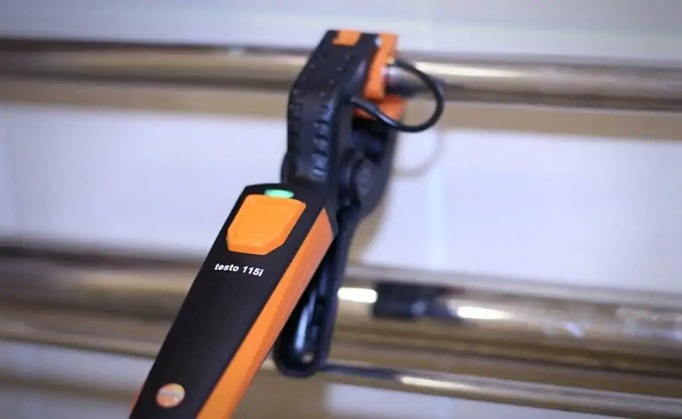
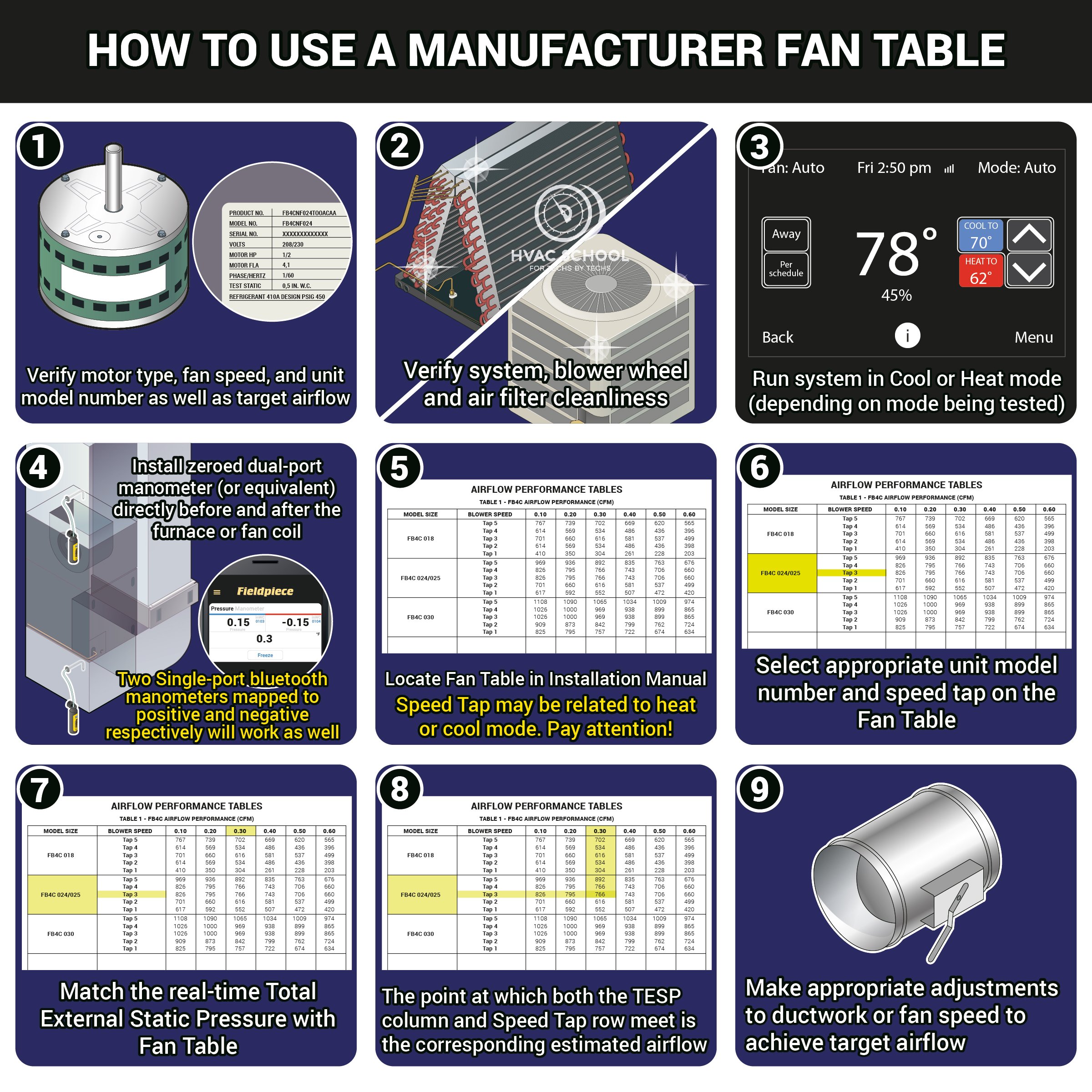
Another critical step in assessing system performance is measuring airflow.
Many techs have learned to check the charge using superheat and subcooling, and that's fine. Stick with what you know. But instead of resisting new techniques or calling others lazy, consider expanding your knowledge. There are simple tests beyond connecting gauges that provide a much clearer picture of system performance.
Understanding System Capacity
Are you familiar with the formula Amps × Volts = Watts?
This fundamental equation is widely used in troubleshooting electrical components. Measuring system capacity follows the same principle—if you understand a few key values, you can determine how the entire system is functioning.
Using non-invasive testing provides a far more accurate assessment of system integrity than checking the charge alone. If airflow is incorrect, system capacity will suffer—even with a proper charge.
The Role of Non-Invasive Testing in Commissioning
After a new installation, a system must be commissioned—this is non-negotiable. However, non-invasive testing remains highly effective even after commissioning, often providing a more reliable assessment than simply checking the charge.
Why You Should Incorporate Non-Invasive Testing
Non-invasive testing is a foundational diagnostic tool. I strongly encourage any technician who isn't currently using it to explore ways to integrate it into their workflow.
- It makes you a smarter tech. You’ll understand more about system performance.
- You’ll sound smarter online. Let’s be real—that never hurts.
- It increases your value. Your employer and customers will appreciate the added expertise.
Incorporating non-invasive testing into your routine doesn’t replace traditional methods—it enhances them. Adapt, expand your knowledge, and make sure you’re getting the full picture of system performance.
I never once mentioned measureQuick, well, until now. Go use a little or a lot of it; it bridges the gaps until you fully understand this topic. I want to point out though, that I was doing measured performance testing for years before apps and digital tools, even before Al Gore invented the internet 
—Ed Janowiak
Highlight a short passage, or bring a question about a specific moment into HVAC No Bull Forum.
Discuss this reference → Related forum discussions Related Tech Tips












Comments
To leave a comment, you need to log in.
Log In