
Electrical Basics: How and Why Electrons Move (Podcast)
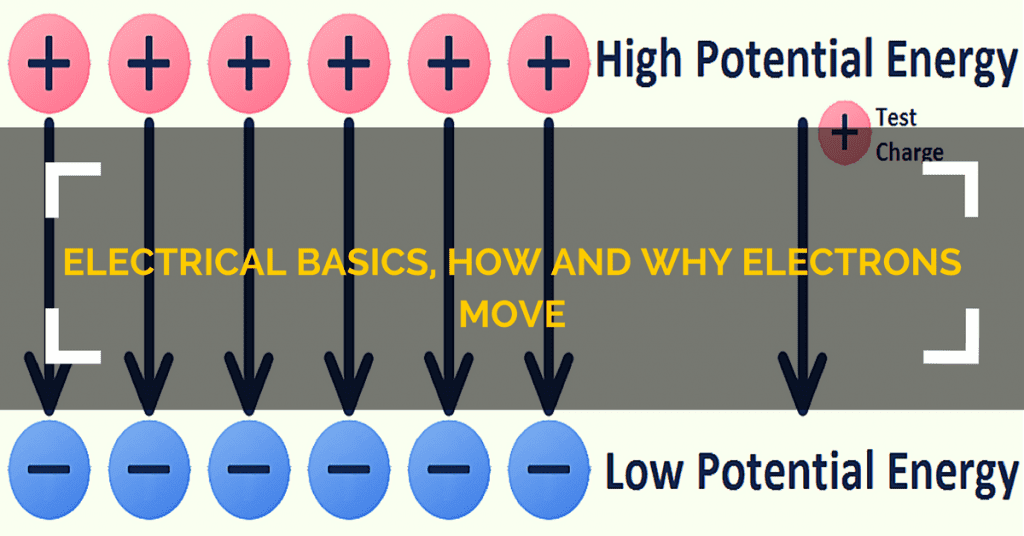
In HVAC work, we deal with quite a few electrical components. But where does electricity come from? Why do electrons move? In this podcast episode, we talk about differential charges, sine waves, and some voltage measurement basics.
A large chunk of electrical theory is centered on electron movement. We get electrons to move with differentials in charges or energy states. Nature tends towards equilibrium, so electrons will move to restore a state of balance. A battery or transformer does not create energy; they create energy imbalances that cause electron motion to occur. Alternating current (AC) creates a differential by reversing the direction of current several times per second. Transformers and motors use AC power and inductance to drive HVAC systems.
When testing with a voltmeter, you're looking for a difference in charges. So, the probe placement matters. When you have no difference in charges, no electrical work is being done.
Most of the power we use comes from power plants. At these power plants, rotating magnetic fields generate the power we use. Power generated through magnetism creates a sine wave. A sine wave is a variation of a circle; the wave goes up and down in a cyclical pattern. So, you can look at sine waves and determine exactly how legs of power are out of phase with each other. For example, single-phase power comes in and splits at the transformer, creating an opposing sine wave that is 180 degrees out of phase with the power leg (when one wave peaks, the other valleys).
There is also some confusion surrounding “neutral” and “ground.” Ground is merely a conductor for safety reasons and has nothing to do with electrical operations; the ground does not generate electron movement. Neutral is NOT the same thing; neutral is a circuit conductor, but we usually connect it to ground.
If you have an iPhone, subscribe to the podcast HERE, and if you have an Android phone, subscribe HERE.
Author:










Comments
To leave a comment, you need to log in.
Log In