
January 2021
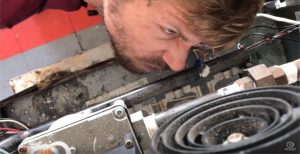
This article is an extension of HVAC School’s “How to Measure Gas Pressure” video. Additional input was provided by Jim Bergmann. Bubble test procedures and standards were provided by Honeywell. Links to source materials are available at the end of this article. If there’s one complaint that HVAC techs should never take lightly, it’s a […]
Read more

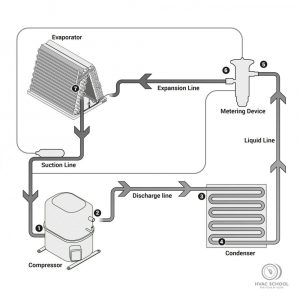
Many in our industry can misunderstand the differences between temperature and heat, although these are related. Substances are composed of many moving molecules that change their speed as they release or gain heat. When we heat a glass of water in a microwave, its molecules start to move more quickly. The velocity increase results in […]
Read more
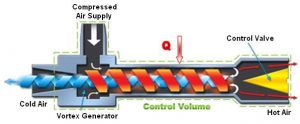
We just wrote about rejecting heat to the atmosphere via radiant cooling. That’s one example of cooling without refrigerants, but there are quite a few others out there. In this article, we’ll look at some other cooling methods that don’t use refrigerants. Vortex tubes Vortex tubes swirl gas in a chamber, separating it into hot […]
Read more

Net refrigeration effect (NRE) is the quantity of heat that each pound of the refrigerant absorbs in the refrigerated space to produce useful cooling. That’s a pretty vague definition. We know that it’s an amount of heat in processes that take place within the evaporator. Still, the phrase “useful cooling” seems rather broad. Even though […]
Read more